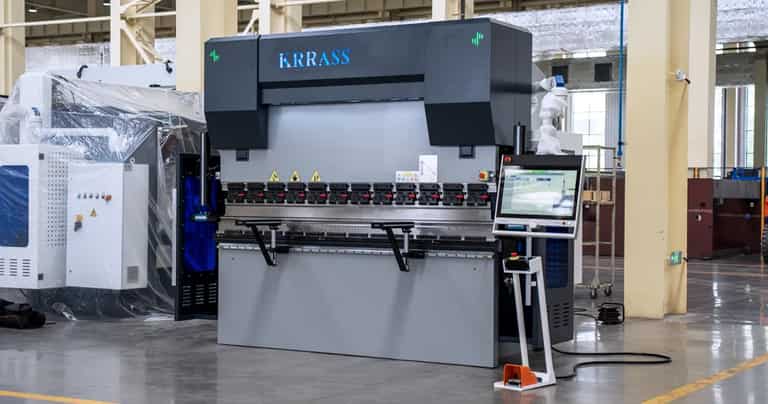
The sheet metal fabrication industry is undergoing a profound transformation. Driven by rising energy costs, tightening environmental regulations, and the relentless demand for tighter tolerances, manufacturers around the world are rethinking the way they bend metal. At the center of this shift is a technology that eliminates hydraulic oil entirely and replaces it with intelligent electric servo drive systems: the pure electric press brake.
The KRRASS EPP-70T2500 Pure Electric Press Brake represents the latest evolution of this technology. Built with world-class components from Delem, Schneider Electric, TSUBAKI NAKASHIMA, Hiwin, and Techmation, it delivers bending precision, energy efficiency, and operator safety that hydraulic machines simply cannot match. This article takes an in-depth, data-driven look at every aspect of the EPP-70T2500 — from its technical architecture and component selection to its total cost of ownership and real-world applications — so that fabrication shop owners, production engineers, and procurement managers can make an informed decision.
Feature
- Unmatched Precision: The KRRASS EPP-70T2500 sets a new standard in bending precision, utilizing high-torque electric servo motors and advanced magnetic encoders. With a repeatability of ±0.005 mm, this press brake ensures that every bend is executed with outstanding accuracy, making it the ideal choice for industries requiring tight tolerances.
- Energy Efficiency Redefined: Optimized for minimal energy consumption, the EPP-70T2500 operates at an average power use of just 2.7 kW. This represents a staggering 50-70% reduction in energy costs compared to traditional hydraulic models, translating to annual savings between $5,000 to $9,000 — an investment that pays off in the long run.
- Zero Environmental Impact: Unlike hydraulic press brakes, the EPP-70T2500 operates without hydraulic fluids, eliminating the risk of leaks and disposal concerns. This oil-free design not only simplifies maintenance but also aligns with sustainability goals, making it an excellent choice for eco-conscious manufacturers.
- Advanced Safety Features: Your team’s safety is paramount with the EPP-70T2500. Equipped with DSP Laser Protection and a rear light curtain, this machine provides an advanced safety system that monitors hazardous zones in real-time, significantly reducing the risk of accidents during operation.
- Industry 4.0 Ready: Stay ahead of the manufacturing revolution with the EPP-70T2500’s Industry 4.0 compatibility. Its digital controller supports seamless integration with manufacturing systems, providing valuable data and analytics for improved production efficiency and decision-making.
- Robust Build Quality: Constructed from world-class components sourced from top-tier suppliers, such as Schneider Electric and Delem, the EPP-70T2500 is engineered for reliability and longevity. Each element of this machine is designed to withstand the rigorous demands of industrial environments, ensuring optimal performance over years of operation.
Table of Contents
Why the Manufacturing World Is Moving Toward Electric Press Brakes
To understand why machines like the EPP-70T2500 matter, it helps to look at the broader market forces reshaping the industry.
The global press brake market was valued at approximately $667.5 million in 2024 and is projected to reach $1,055.89 million by 2032, growing at a compound annual growth rate (CAGR) of about 6.1%, according to Persistence Market Research. Within this broader market, the electric press brake segment is growing significantly faster — some analysts project a CAGR as high as 12.91% through 2031, driven by the global push for energy-efficient machinery and clean manufacturing.
This growth is not happening in a vacuum. Several converging trends are accelerating adoption:
- Energy cost pressure. Industrial electricity prices have risen steadily across Europe, North America, and parts of Asia. For fabrication shops running press brakes 8 to 16 hours per day, even modest energy savings per machine translate into thousands of dollars annually.
- Environmental regulation. Governments worldwide are tightening rules around hydraulic fluid disposal, carbon emissions, and workplace noise. In the European Union, the EU’s Eco-Design Directive continues to raise the bar for energy efficiency in industrial machinery. Pure electric press brakes, which use zero hydraulic oil and consume far less electricity, align naturally with these regulatory trends.
- The Industry 4.0 revolution. According to PwC’s Industrial Manufacturing Outlook, manufacturers expect their levels of tech enablement and automation to more than double by 2030. Electric servo press brakes — with their digital CNC controllers, programmable motion profiles, and real-time monitoring capabilities — are inherently better suited to this connected, data-driven factory environment than legacy hydraulic machines.
- The green manufacturing boom. The global green manufacturing market is valued at approximately $242.2 billion in 2025 and is expected to reach $499.7 billion by 2032. This doubling of the market reflects a fundamental shift in purchasing behavior: buyers now actively seek machinery that reduces environmental impact without sacrificing productivity.
Taken together, these forces create a compelling case for upgrading from hydraulic to pure electric bending technology. But what does “pure electric” actually mean, and how does the EPP-70T2500 deliver on this promise?
What Is a Pure Electric Press Brake and How Does It Work?
A pure electric press brake — sometimes called a servo-electric press brake — uses high-torque electric servo motors coupled with precision ball screws or grinding screws to drive the ram (the moving beam that presses the punch into the die). There are no hydraulic cylinders, no hydraulic pumps, no hydraulic oil, and no valves. The entire force-generation and motion-control system is electric and mechanical.
If you are new to this technology, you can read KRRASS’s dedicated guide on how a servo-electric press brake works for a detailed walkthrough of the operating principles. Here is a simplified overview of the process:
- The CNC controller (in this case, the Delem DA-69S) calculates the optimal bending sequence, ram position, and tonnage based on the material type, thickness, bend angle, and tooling geometry.
- Dual servo motors receive position commands from the controller and rotate the heavy-duty grinding screws.
- The grinding screws convert the rotary motion of the motors into precise linear motion, driving the ram downward with exactly the right amount of force.
- Magnetic linear encoders mounted on the ram provide real-time position feedback to the controller, enabling closed-loop positioning accuracy measured in microns.
- Once the bend is complete, the servo motors reverse direction and retract the ram at high speed, ready for the next cycle.
This architecture has several immediate advantages over hydraulic systems. The most important is precision: electric servos can position the ram with repeatability far exceeding hydraulic cylinders, because there is no oil compressibility, no thermal expansion of hydraulic fluid, and no valve lag. The second advantage is energy efficiency: servo motors only draw power when the ram is in motion. When the machine is idle between bends — which is a large portion of any production cycle — power consumption drops to near zero.
For a broader understanding of press brake fundamentals, KRRASS also offers a comprehensive press brake basics guide for beginners that covers the core concepts.
Introducing the KRRASS EPP-70T2500: Architecture and Design Philosophy

The EPP-70T2500 is designed for fabrication shops that need a reliable, high-precision bending solution in the 70-ton, 2500mm class. Its model number tells you the key specifications at a glance: EPP stands for Electric Press Brake (Pure Electric), 70T denotes 70 tons of bending force (700 kN), and 2500 refers to the maximum bending length of 2500mm.
What sets this machine apart is not just the electric drive but the overall quality of its subsystems. KRRASS has sourced components from some of the most respected names in industrial automation:
| Component | Supplier | Country | Purpose |
|---|---|---|---|
| CNC Controller | Delem (DA-69S) | Netherlands | 3D programming, bending simulation, process control |
| Electrical System | Schneider Electric | France | Power distribution, circuit protection, motor drives |
| Dual Servo Motors | Techmation | Taiwan | High-torque ram drive (2 × 21 kW) |
| Grinding Screws (Y-axis) | TSUBAKI NAKASHIMA | Japan | Precision linear motion, heavy-duty load bearing |
| Backgauge Ball Screws & Linear Guides | Hiwin | Taiwan | Backgauge positioning accuracy |
| Magnetic Linear Encoder | GIVI | Italy | Real-time ram position feedback |
| Foot Switch | KACON | South Korea | Operator-controlled ram actuation |
This is not a machine built around cost-cutting. Every critical motion and control component has been selected for reliability and precision, and the pedigree of these suppliers is recognized across the global machine tool industry. Schneider Electric, for example, holds approximately 18% of the global low-voltage electrical equipment market and is widely regarded as a benchmark for electrical component reliability. Hiwin, similarly, is one of the world’s leading manufacturers of precision linear guideways and ball screws used in CNC machine tools.
The Delem DA-69S: The Brain Behind the Bends

The CNC controller is arguably the single most important component on any modern press brake, because it determines how accurately and how efficiently the machine can execute complex bending programs. The EPP-70T2500 ships with the Delem DA-69S, Delem’s flagship 3D graphical controller from the DA-60 series, designed and manufactured in the Netherlands.
For operators and programmers, the DA-69S offers a fundamentally different experience compared to older 2D controllers or basic NC systems:
- 3D Graphical Programming and Simulation. Instead of manually calculating bend sequences and entering numeric values line by line, operators can define the workpiece in a 3D graphical environment. The controller renders the sheet metal blank, the tooling, and the machine frame in three dimensions, then automatically calculates the optimal bending sequence. This means the controller considers the spatial relationship between the part, the punch, the die, and the backgauge at every step — and it checks for collisions before the first bend is ever made.
- Automatic Bend Sequence Calculation. For complex parts with multiple bends, the order in which bends are executed matters enormously. Bending in the wrong sequence can cause the part to collide with the machine frame or the tooling, resulting in scrapped parts and wasted time. The DA-69S automatically generates the optimal sequence, taking into account bend angles, flange lengths, and machine geometry. This dramatically reduces setup time and eliminates a common source of operator error.
- Real-Time Bending Simulation. Before production begins, operators can run a full virtual bending simulation on the touchscreen display. The simulation shows exactly how the part will be formed, step by step, with collision warnings flagged in real time. This “test before you bend” workflow saves material, protects tooling, and gives operators confidence when running new programs.
- High-Resolution Touchscreen Interface. The DA-69S features a large, high-resolution touchscreen that provides intuitive access to all programming, machine, and diagnostic functions. Graphical icons, drag-and-drop tool selection, and on-screen prompts reduce the learning curve for operators transitioning from older control systems.
- Material Database and Springback Compensation. The controller includes a built-in material database with preloaded parameters for common sheet metal materials (mild steel, stainless steel, aluminum, copper, and more). It also automatically compensates for springback — the tendency of metal to partially return to its original shape after bending — by calculating the overbend angle required to achieve the target dimension.
KRRASS provides a detailed Delem DA-69S system introduction manual on their website for operators who want to dive deeper into the controller’s capabilities.
Operator Safety: DSP Laser Protection and Rear Light Curtain
In any press brake operation, safety is paramount. The pinch point between the punch and the die is one of the most hazardous zones in any sheet metal shop, and press brake accidents — particularly finger and hand amputations — remain a serious concern in the industry. The EPP-70T2500 addresses this challenge with a dual-layer safety system.
DSP Laser Protection (Front)

The front of the machine is equipped with a DSP (Digital Signal Processing) laser safety system that creates an invisible protective curtain directly beneath the punch tip — the most dangerous area. Here is how it works in practice:
- During the high-speed approach phase, the ram descends rapidly toward the workpiece. The DSP laser system monitors the zone between the punch and the die in real time.
- If the system detects any object (such as an operator’s finger or hand) in the protection zone, it instantly triggers a stop signal.
- The stopping response time is measured in milliseconds, fast enough to prevent contact before the punch reaches the workpiece.
- Crucially, the protection zone moves synchronously with the upper ram, meaning it is always positioned exactly where the danger is greatest — directly under the tip of the punch.
This is a significant advancement over traditional safety systems. According to industry analyses of press brake laser safety technology, modern laser-based AOPD (Active Opto-electronic Protective Device) systems provide near-tool guarding at finger resolution while maintaining cycle speeds that traditional physical barriers and basic light curtains cannot match. This means operators get maximum protection without the productivity penalty that older safety systems impose.
Rear Light Curtain Protection
The back side of the press brake presents a different but equally important safety challenge. The backgauge system on a modern CNC press brake moves rapidly along multiple axes (X, R, and optionally Z), and operators or bystanders who reach into this area during machine operation risk serious injury. The EPP-70T2500 addresses this with a rear safety light curtain — an array of infrared beams that creates a comprehensive safety barrier across the entire backgauge area.
If any object interrupts the light curtain while the machine is in operation, the system immediately halts all motion. This is particularly important during multi-axis backgauge repositioning between bends, when the gauge fingers are moving at high speed to their next position.
For shops that want to understand safety best practices more broadly, KRRASS provides a useful guide on press brake operation best practices for beginners that covers both safety protocols and operational efficiency.
Energy Efficiency: Where the Numbers Tell the Story
Energy efficiency is one of the most compelling reasons to choose a pure electric press brake, and the EPP-70T2500 delivers exceptional performance in this area. Let’s look at the data.
Power Consumption Comparison
The EPP-70T2500 has a rated main motor power of 2 × 21 kW (42 kW total installed power), but its average operating power consumption is only 2.7 kW. This is a remarkable figure for a 70-ton press brake, and it becomes even more impressive when compared to a hydraulic machine of equivalent capacity.
A conventional hydraulic press brake in the 70-ton class typically runs its hydraulic pump motor continuously during operation, consuming somewhere between 11 kW and 18 kW on average — even when the ram is stationary between bends. This is because hydraulic pumps must maintain system pressure regardless of whether the machine is actively bending or simply waiting for the operator to position the next part.
| Metric | EPP-70T2500 (Pure Electric) | Conventional Hydraulic (70T Class) |
|---|---|---|
| Installed Motor Power | 2 × 21 kW | 1 × 18.5–22 kW |
| Average Power Consumption | 2.7 kW | 11–18 kW |
| Power During Idle | Near zero | 5–10 kW (pump running) |
| Estimated Annual Electricity Cost* | ~$1,620 | ~$6,600–$10,800 |
| Estimated Annual Savings | $4,980–$9,180 | — |
*Based on 2,000 operating hours per year at $0.30/kWh (approximate industrial rate in many regions).
This means the EPP-70T2500 can save operators anywhere from $5,000 to $9,000 per year in electricity costs compared to a hydraulic equivalent, depending on local energy rates and usage patterns. Over a typical machine lifespan of 10 to 15 years, the cumulative energy savings can range from $50,000 to over $130,000 — often enough to cover a substantial portion of the machine’s purchase price.
Industry research supports these figures. According to comparative analyses of electric vs. hydraulic press brakes, servo-electric systems achieve 50–70% energy savings over hydraulic models, with some configurations reaching up to 80% savings when idle-time power consumption is factored in.
Why Is the Savings So Large?
The answer lies in the fundamental difference between how hydraulic and electric systems use energy:
- Hydraulic systems convert electrical energy into hydraulic pressure through a pump, then convert that pressure back into mechanical motion through cylinders. Each conversion step involves energy loss (primarily as heat). The pump runs continuously during operation, consuming power even when the ram is stationary.
- Electric servo systems convert electrical energy directly into mechanical motion through the servo motor and ball screw. There is no intermediate fluid system and no continuous energy drain. The motors only draw power when they are actively rotating — which means power consumption drops to near zero during idle periods.
This direct-drive architecture is inherently more efficient, and it eliminates several sources of waste that are unavoidable in hydraulic machines.
The Environmental Advantage: Zero Oil, Zero Leaks, Zero Disposal
Beyond energy savings, the pure electric design eliminates the environmental burden associated with hydraulic fluid. This is a bigger issue than many people realize.
According to the U.S. Environmental Protection Agency (EPA), the United States alone generates approximately 1.3 billion gallons of used oil per year, of which an estimated 200 million gallons are improperly disposed of. A single gallon of used hydraulic oil can contaminate up to one million gallons of fresh water — a staggering ratio that underscores why eliminating hydraulic fluid from fabrication equipment is an environmental priority.
For a typical hydraulic press brake, the environmental lifecycle of hydraulic oil includes:
- Procurement. Hydraulic fluid must be purchased, transported, and stored. A 70-ton hydraulic press brake may hold 200–400 liters of hydraulic oil.
- Operational losses. Hydraulic systems inevitably develop leaks over time — at hose fittings, cylinder seals, and valve connections. These leaks contaminate the shop floor, create slip hazards, and require cleanup time and materials.
- Thermal degradation. Hydraulic oil degrades with use and heat, requiring periodic replacement. Typical replacement intervals range from 2,000 to 4,000 operating hours.
- Disposal. Used hydraulic oil is classified as a regulated waste in most jurisdictions. Disposal costs range from $0.15 to $0.68 per gallon for recyclable oil to $10 to $20+ per gallon for contaminated oil, according to EPA data and industry surveys. For a machine with a 300-liter (roughly 80-gallon) reservoir, a single oil change can cost $50 to $1,600 in disposal fees alone, depending on contamination levels.
- Environmental liability. Spills and improper disposal carry the risk of environmental remediation costs, regulatory fines, and reputational damage.
The EPP-70T2500 eliminates all of these costs and risks because it uses zero hydraulic oil. There is no reservoir to fill, no oil to change, no filters to replace, no leaks to clean up, and no waste oil to dispose of. For companies pursuing ISO 14001 environmental management certification or seeking to reduce their environmental footprint for regulatory or corporate social responsibility reasons, this is a significant advantage.
The global trend toward sustainable manufacturing supports this direction. The global green manufacturing market is projected to nearly double from $242.2 billion in 2025 to $499.7 billion by 2032, reflecting strong demand for cleaner production technologies. The EPP-70T2500 positions fabrication shops to participate in this shift.
Technical Specifications: A Detailed Look
Below is the complete technical parameter table for the KRRASS EPP-70T2500. These specifications define the machine’s bending capacity, speed, and physical footprint.
| Parameter | Value |
|---|---|
| Model | EPP-70/2500 |
| Bending Force | 700 kN (70 Tons) |
| Maximum Bending Length | 2,500 mm |
| Distance Between Columns | 2,000 mm |
| Throat Depth | 305 mm |
| Ram Stroke | 180 mm |
| Maximum Opening Height | 470 mm |
| Main Motor Power | 2 × 21 kW |
| Average Power Consumption | 2.7 kW |
| X-axis Maximum Stroke | 600 mm |
| R-axis Maximum Stroke | 150 mm |
| Y-axis Fast Approach Speed | 200 mm/s |
| Y-axis Working/Bending Speed | 0–30 mm/s |
| Y-axis Return Speed | 200 mm/s |
| Machine Weight | 6,500 kg |
What These Numbers Mean in Practice
Bending force and length. With 70 tons of force over a 2,500mm bending length, this machine can handle a wide range of sheet metal thicknesses. As a general guideline (actual capacity depends on material type, die opening, and bend length):
| Material | Approximate Max. Thickness (full 2500mm bend) |
|---|---|
| Mild Steel (A36) | ~4 mm |
| Stainless Steel (304) | ~3 mm |
| Aluminum (5052-H32) | ~5 mm |
For shorter bend lengths — bending a part that is only 1000mm wide, for example — the effective thickness capacity increases proportionally, because the same tonnage is distributed over a shorter length.
- Ram speed. The fast approach and return speed of 200 mm/s means the ram traverses the full 180mm stroke in less than one second during non-working travel. This rapid cycling between bends is one of the reasons pure electric press brakes can achieve higher parts-per-hour output than hydraulic machines in many production scenarios. The variable working speed of 0–30 mm/s gives the operator full control over the bending speed, allowing slower speeds for delicate or high-precision bends and faster speeds for simple, repetitive work.
- Backgauge range. The X-axis stroke of 600mm and R-axis stroke of 150mm provide substantial flexibility for positioning the backgauge fingers. The X-axis determines how far the backgauge can retract from the bend line, which affects the maximum flange length the machine can support. The R-axis allows the backgauge fingers to move vertically, enabling bends at different heights on the workpiece without manual repositioning.
Hydraulic vs. Pure Electric: A Comprehensive Head-to-Head Comparison
For shops that are currently running hydraulic press brakes and considering an upgrade, the following comparison table provides a detailed side-by-side analysis. You can also read KRRASS’s in-depth article on choosing the right press brake: hydraulic vs. electric models for additional context.
| Category | Pure Electric (EPP-70T2500) | Conventional Hydraulic |
|---|---|---|
| Drive System | Dual servo motors + grinding screws | Hydraulic pump + cylinders |
| Hydraulic Oil | None | 200–400 liters required |
| Positioning Accuracy (Y-axis) | ±0.005 mm or better | ±0.01–0.05 mm |
| Repeatability | Excellent (no oil compressibility drift) | Good, but affected by oil temperature |
| Average Power Consumption | 2.7 kW | 11–18 kW |
| Energy Savings | 50–80% vs. hydraulic | Baseline |
| Noise Level | Low (<65 dB typical) | Moderate to high (75–85 dB) |
| Warm-Up Time | None | 15–30 minutes for oil to reach operating temperature |
| Oil Changes | Not applicable | Every 2,000–4,000 hours |
| Filter Replacements | Not applicable | Regular intervals required |
| Seal/Hose Maintenance | Not applicable | Periodic replacement needed |
| Heat Generation | Minimal | Significant (hydraulic fluid heating) |
| Thermal Drift | None | Bending accuracy shifts as oil temperature changes |
| Environmental Compliance | Excellent (zero oil) | Requires waste oil management |
| Initial Purchase Price | Higher | Lower |
| Total Cost of Ownership (10 years) | Significantly lower | Higher due to energy and maintenance |
| Industry 4.0 Compatibility | Native digital integration | Limited, requires retrofit |
As this comparison shows, while pure electric press brakes typically have a higher initial purchase price, their lower operating costs, reduced maintenance requirements, and superior precision often result in a lower total cost of ownership over the machine’s lifecycle. The elimination of hydraulic subsystems alone removes a significant portion of the routine maintenance burden: no oil changes, no filter replacements, no seal inspections, no hose replacements, and no thermal management.
For shops interested in exploring a middle ground, KRRASS also offers hybrid press brakes that combine servo-driven hydraulic pumps with conventional cylinder systems, achieving energy savings of 55–78% compared to traditional machines while retaining the higher force capacity of hydraulic systems.
Total Cost of Ownership: A 10-Year Financial Model
To illustrate the financial case for the EPP-70T2500, let us construct a simplified 10-year total cost of ownership (TCO) model comparing it with a conventional hydraulic press brake of equivalent capacity (70 tons, 2500mm). This model assumes a single-shift operation (2,000 hours per year) in a region with industrial electricity rates of approximately $0.30/kWh.
Assumptions
| Parameter | EPP-70T2500 | Hydraulic Equivalent |
|---|---|---|
| Annual Operating Hours | 2,000 | 2,000 |
| Average Power Consumption | 2.7 kW | 15 kW (mid-range estimate) |
| Electricity Rate | $0.30/kWh | $0.30/kWh |
| Hydraulic Oil Reservoir | N/A | 300 liters (~80 gallons) |
| Oil Change Interval | N/A | Every 3,000 hours (~1.5 years) |
| Oil Cost per Change | N/A | $300–$500 |
| Oil Disposal Cost per Change | N/A | $100–$500 |
| Annual Filter/Maintenance Cost | $0 | $500–$1,000 |
| Seal/Hose Replacement (over 10 years) | $0 | $2,000–$5,000 |
10-Year Cost Comparison
| Cost Category | EPP-70T2500 | Hydraulic Equivalent | Savings |
|---|---|---|---|
| Annual Electricity | $1,620 | $9,000 | $7,380/year |
| 10-Year Electricity | $16,200 | $90,000 | $73,800 |
| Hydraulic Oil (purchase, 10 years) | $0 | $2,000–$3,300 | $2,000–$3,300 |
| Oil Disposal (10 years) | $0 | $700–$3,300 | $700–$3,300 |
| Filters & Consumables (10 years) | $0 | $5,000–$10,000 | $5,000–$10,000 |
| Seal/Hose Maintenance (10 years) | $0 | $2,000–$5,000 | $2,000–$5,000 |
| Total 10-Year Operating Cost | $16,200 | $99,700–$111,600 | $83,500–$95,400 |
Over a 10-year period, the EPP-70T2500 is projected to save between $83,500 and $95,400 in operating costs compared to a hydraulic equivalent. This figure does not include secondary savings from reduced downtime (no oil-related maintenance), improved part quality (higher precision means less scrap), or the productivity gains from faster ram cycling and shorter setup times.
When these secondary benefits are factored in, the payback period for the price premium of a pure electric press brake is typically 2 to 4 years, depending on production volume and part complexity. After the payback period, the machine continues to generate savings for the remainder of its operational life.

Application Industries: Where the EPP-70T2500 Excels
The EPP-70T2500’s combination of precision, cleanliness, and energy efficiency makes it particularly well suited to industries where tight tolerances, clean production environments, and cost efficiency are critical. Below is an overview of the key application sectors.
Electrical Enclosures and Control Cabinets
This is one of the largest application segments for press brakes in the 70-ton, 2500mm class. Electrical enclosures — the metal boxes that house circuit breakers, PLCs, relays, and other electrical components — are typically fabricated from mild steel or aluminum sheet in thicknesses ranging from 1.0mm to 3.0mm. These enclosures require precise, consistent bends because they must assemble correctly with gaskets, doors, and mounting hardware. The EPP-70T2500’s Y-axis positioning accuracy ensures that every panel bends to the same angle and dimension, batch after batch.
Aerospace Components
Aerospace manufacturing demands some of the tightest tolerances in the metal fabrication industry. Aerospace sheet metal components — including brackets, fairings, structural ribs, and access panels — must adhere to standards such as AS9100 (the aerospace quality management system standard) and meet strict angular and dimensional tolerances. The pure electric drive system of the EPP-70T2500, combined with the Delem DA-69S controller’s automatic springback compensation and 3D simulation, provides the repeatability and accuracy that aerospace applications require.
Medical Equipment
Medical device enclosures, hospital equipment housings, and laboratory instrument chassis require clean, precise bends in materials that range from stainless steel (for sterilization compatibility) to aluminum (for lightweight portability). The oil-free operation of the EPP-70T2500 is a particular advantage here: there is no risk of hydraulic fluid contamination on parts destined for cleanroom or clinical environments.
Elevator Manufacturing
Elevator panels, door frames, and structural components require large-format bending with consistent quality across long production runs. The 2500mm bending length of the EPP-70T2500 covers most elevator panel sizes in a single bend. KRRASS’s expertise in the elevator manufacturing sector is also reflected in their dedicated resource on fiber laser cutting for elevator manufacturing, which complements the press brake in a complete sheet metal fabrication workflow.
Telecommunications
Telecom racks, server chassis, and networking equipment enclosures are typically fabricated from thin to medium-gauge sheet metal with numerous bends. The EPP-70T2500’s fast approach and return speeds (200 mm/s) enable high-throughput production of these parts, while the precision backgauge system ensures consistent dimensions across large production batches.
Automotive Components
While heavy structural automotive parts typically require higher-tonnage machines, many precision automotive components fall within the 70-ton capacity range: brackets, heat shields, battery enclosures for electric vehicles, interior trim supports, and small structural reinforcements. The automotive industry’s increasing focus on lightweight materials (aluminum, advanced high-strength steel) makes the precision of a pure electric press brake especially valuable, as these materials require exact bending parameters to avoid cracking or springback issues.
Precision Components: What’s Inside the EPP-70T2500
A press brake is ultimately the sum of its components, and the quality of those components determines the machine’s performance, reliability, and lifespan. Let’s take a closer look at the critical subsystems in the EPP-70T2500.
TSUBAKI NAKASHIMA Y-axis Grinding Screws
The grinding screws (also known as ground ball screws) that drive the Y-axis are the primary force-transmission elements in the machine. They convert the rotational motion of the servo motors into the precise linear motion of the ram. TSUBAKI NAKASHIMA, headquartered in Japan, is one of the world’s most respected manufacturers of precision ball screws, with a reputation for quality that spans decades.
Ground ball screws differ from rolled ball screws in their manufacturing process: the helical groove is precision-ground rather than cold-rolled, resulting in significantly higher accuracy, smoother motion, and better load distribution. For a press brake application — where the screw must withstand 70 tons of force while maintaining micron-level positioning — ground ball screws are the correct engineering choice.
Hiwin Backgauge System
The backgauge is responsible for positioning the sheet metal blank at the correct location relative to the bend line, and its accuracy directly determines the dimensional accuracy of the finished part. The EPP-70T2500 uses Hiwin precision ball screws and linear guideways for the backgauge axes. Hiwin, based in Taiwan, is a globally recognized manufacturer of linear motion components, and their products are widely used in CNC machine tools, semiconductor manufacturing equipment, and precision measurement instruments.
The combination of Hiwin ball screws (for precise positioning) and Hiwin linear guideways (for smooth, friction-free travel) ensures that the backgauge fingers move to their programmed positions accurately and repeatably, even after years of heavy use.
GIVI Magnetic Linear Encoders

Position feedback is the foundation of closed-loop servo control. The EPP-70T2500 uses magnetic linear encoders from GIVI, an Italian manufacturer known for precision measurement systems. Unlike optical encoders, magnetic encoders are highly resistant to dust, oil mist, and vibration — making them ideal for the demanding environment of a press brake shop. These encoders provide real-time position data to the Delem DA-69S controller, enabling the servo system to maintain positioning accuracy measured in thousandths of a millimeter.
Techmation Dual Servo Drive
Techmation, based in Taiwan, supplies the dual servo motors that power the EPP-70T2500. Each motor is rated at 21 kW, providing the torque necessary to generate 70 tons of bending force through the grinding screws. The dual-motor architecture allows independent control of the left and right ends of the ram, which is essential for:
- Synchronization. Keeping both sides of the ram moving in perfect parallel is critical for consistent bend angles across the full bending length.
- Crowding (tilting) compensation. When bending a part that is offset to one side of the machine, the ram naturally tends to tilt slightly toward the loaded side. The dual servo system detects this tendency through the linear encoders and applies corrective torque in real time to keep the ram parallel.
- Redundancy. If one motor experiences an issue, the system can detect the anomaly and alert the operator, rather than allowing a synchronized error to propagate.
The Delem DA-69S in Greater Detail: Features That Drive Productivity
Returning to the controller, it is worth exploring some of the DA-69S’s specific productivity features in more detail, because the controller has an outsized impact on how efficiently a shop can program and run parts.
Tool Library Management
The DA-69S maintains a comprehensive tool library where operators can define and store punch and die profiles with full 3D geometry. This means the controller knows the exact shape, dimensions, and clearance of every tool in the shop’s inventory. When a new bending program is created, the operator simply selects the appropriate tools from the library — no manual dimension entry required. This library-based approach eliminates a common source of programming errors and speeds up the setup process for new jobs.
Automatic Crowning Compensation
When a long part is bent across the full width of the machine, the ram and the bed naturally deflect slightly under load — a phenomenon known as “bed deflection.” This deflection causes the bend angle to be slightly less at the center of the bend compared to the edges. The DA-69S can automatically calculate and apply crowning compensation, adjusting the ram position to counteract this deflection and produce a uniform bend angle across the entire length. This feature is especially valuable for the 2500mm bending length of the EPP-70T2500.
Multi-Step Bend Programming
For parts that require multiple bends at different angles and positions, the DA-69S manages the entire bending sequence as a single program. Each step includes the backgauge position, the bend angle, the bending speed, and the ram position. The operator simply loads the program, and the controller guides them through each step, automatically repositioning the backgauge and adjusting the ram parameters between bends. This dramatically reduces the skill required to run complex multi-bend parts and minimizes the risk of operator error.
Connectivity and Data Management
Modern fabrication shops increasingly require their machines to communicate with shop management systems. The DA-69S supports standard industrial communication protocols, enabling bending programs to be transferred via USB, network, or even loaded directly from a central server. Production data — including bend counts, cycle times, and error logs — can be exported for quality tracking and process optimization. This connectivity aligns with the broader CNC press brake technology trend toward data-driven manufacturing.
Noise Reduction and Workplace Environment
One often-overlooked benefit of pure electric press brakes is their dramatically lower noise output. Hydraulic press brakes generate noise from several sources: the hydraulic pump running continuously, the flow of oil through valves and hoses, and the mechanical impact of the ram on the workpiece. In a typical fabrication shop, a hydraulic press brake operating at full capacity can produce noise levels of 75 to 85 decibels (dB), which is loud enough to require hearing protection for operators working in close proximity.
The EPP-70T2500, by contrast, has no hydraulic pump and no oil flow noise. Its primary noise sources are the servo motors (which are inherently quiet) and the mechanical contact between the punch, die, and workpiece. Typical operating noise levels for pure electric press brakes are below 65 dB — roughly equivalent to the noise level of a normal conversation. This creates a more comfortable, less fatiguing work environment and may reduce or eliminate the need for hearing protection, depending on local workplace noise regulations.
Maintenance Simplification: What You No Longer Have to Worry About
Maintenance is one of the areas where the pure electric design delivers the most tangible benefits. By eliminating the entire hydraulic subsystem, the EPP-70T2500 removes a long list of maintenance tasks that hydraulic machine operators must perform regularly. The following table summarizes the maintenance comparison:
| Maintenance Task | EPP-70T2500 | Hydraulic Press Brake |
|---|---|---|
| Hydraulic oil level check | Not applicable | Daily |
| Hydraulic oil replacement | Not applicable | Every 2,000–4,000 hours |
| Hydraulic filter replacement | Not applicable | Every 500–1,000 hours |
| Seal inspection/replacement | Not applicable | Every 1–2 years |
| Hose inspection/replacement | Not applicable | Every 2–3 years |
| Oil temperature monitoring | Not applicable | Continuous |
| Oil spill cleanup | Not applicable | As needed |
| Servo motor inspection | Annual visual check | N/A |
| Ball screw lubrication | Per manufacturer schedule | N/A |
| Linear guide lubrication | Per manufacturer schedule | N/A |
| Overall annual maintenance hours | ~4–8 hours | ~40–80 hours |
The reduction in maintenance hours translates directly into increased machine uptime. Every hour spent on hydraulic maintenance is an hour the machine is not producing parts. For shops running at high utilization, the uptime improvement from a pure electric machine can add thousands of additional production hours over the machine’s lifetime.
For shops that want to learn more about press brake maintenance best practices, KRRASS provides a detailed press brake machine operation manual and a comprehensive hydraulic press brake instruction manual (the latter being especially useful for operators transitioning from hydraulic to electric, as it helps them understand what they are leaving behind).
Industry 4.0 Readiness and Smart Factory Integration
The concept of Industry 4.0 — the fourth industrial revolution characterized by interconnected, data-driven manufacturing — is no longer theoretical. According to Deloitte’s 2026 Manufacturing Industry Outlook, approximately 80% of manufacturing executives plan to invest 20% or more of their improvement budgets in technology-driven transformation. The global industrial automation market is projected to grow from $232.5 billion in 2025 to $565.4 billion by 2034, reflecting the scale of this investment.
Pure electric press brakes like the EPP-70T2500 are inherently better suited to Industry 4.0 integration than hydraulic machines for several reasons:
- Digital-native control architecture. The Delem DA-69S controller is built around a digital processing platform that can communicate with external systems via standard industrial protocols. This enables integration with Manufacturing Execution Systems (MES), Enterprise Resource Planning (ERP) software, and quality management platforms.
- Programmable motion profiles. Every aspect of the ram’s motion — approach speed, bending speed, dwell time, and return speed — is digitally programmed and stored as part of the bending program. This means production processes are fully documented, repeatable, and auditable — a key requirement for quality standards like ISO 9001 and IATF 16949.
- Real-time production data. The controller can track and report production metrics including bend count, cycle time per part, error events, and machine status. This data feeds into shop-floor dashboards and analytics platforms, enabling managers to monitor production efficiency and identify bottlenecks in real time.
- Remote diagnostics. With network connectivity, the machine can be monitored remotely by maintenance personnel or even by KRRASS’s technical support team. This enables proactive maintenance and faster troubleshooting, reducing unplanned downtime.
Who Should Consider the EPP-70T2500?
Based on its specifications, capabilities, and cost structure, the EPP-70T2500 is an ideal choice for several types of fabrication operations:
- Job shops running mixed, short-run production. The DA-69S controller’s rapid programming and simulation capabilities make it easy to switch between different parts with minimal setup time. For shops that run dozens of different part numbers per week, this agility is invaluable.
- OEM manufacturers with high-volume repetitive bending. The machine’s precision, speed, and low operating cost make it an efficient workhorse for dedicated production lines producing the same parts day after day.
- Shops in regulated industries. Aerospace, medical device, and automotive suppliers who must meet strict quality and traceability requirements benefit from the machine’s digital programming, real-time monitoring, and repeatable precision.
- Companies with sustainability goals. Organizations pursuing carbon reduction targets, ISO 14001 certification, or corporate sustainability initiatives will find that the EPP-70T2500’s zero-oil, low-energy operation aligns with their environmental objectives.
- Shops upgrading from hydraulic machines. Any fabrication shop currently running a hydraulic press brake in the 50–80 ton, 2000–3000mm class should evaluate the EPP-70T2500 as a replacement when their existing machine reaches the end of its service life. The energy savings alone can justify the upgrade.
To explore the full range of KRRASS press brakes and find the model that matches your specific requirements, visit the complete press brake catalog.
About KRRASS: A Global Leader in Press Brake Manufacturing
KRRASS® is a globally recognized name in sheet metal machinery manufacturing and a frontrunner in the press brake industry in China. As a joint venture between Chinese and Singaporean partners, KRRASS combines cost-effective manufacturing with international quality standards.
The company supplies a diverse range of press brakes — from traditional hydraulic models to advanced hybrid and pure electric machines — serving customers in over 80 countries worldwide. In addition to press brakes, KRRASS manufactures fiber laser cutting machines, hydraulic shearing machines, plate rolling machines, and other sheet metal fabrication equipment, providing a comprehensive equipment portfolio for modern fabrication shops.
Every KRRASS machine is built with a commitment to three core principles: precision engineering, maximum operator safety, and lowest possible total cost of ownership. The EPP-70T2500 exemplifies all three.
Bringing It All Together: Why the EPP-70T2500 Deserves Your Attention
The sheet metal fabrication industry is at an inflection point. The old assumption — that hydraulic press brakes are the default choice for bending metal — is being challenged by a new generation of pure electric machines that offer superior precision, dramatically lower operating costs, zero environmental impact from hydraulic fluid, and native integration with the digital manufacturing systems of the future.
The KRRASS EPP-70T2500 represents the state of the art in this new category. With its Delem DA-69S 3D controller, dual Techmation servo drives, TSUBAKI NAKASHIMA grinding screws, Hiwin backgauge system, and comprehensive DSP laser plus light curtain safety system, it is engineered for fabricators who demand the best.
Over a 10-year ownership period, the machine is projected to save between $83,500 and $95,400 compared to a hydraulic equivalent — savings that come from reduced energy consumption, eliminated hydraulic maintenance, and higher production efficiency. These are not theoretical estimates; they are based on the machine’s documented average power consumption of 2.7 kW, the elimination of all hydraulic fluid costs, and industry-standard maintenance cost data.
Whether you are running a small job shop that needs one versatile, reliable press brake, or managing a large fabrication facility looking to modernize your bending department, the EPP-70T2500 deserves serious consideration.
Get in Touch with KRRASS
If the EPP-70T2500 sounds like the right machine for your operation, the KRRASS team is ready to help. You can:
- Learn more about the full range of electric press brakes on the KRRASS website.
- Read the detailed guide on how electric press brakes work to deepen your understanding of the technology.
- Compare models by browsing the complete press brake product line.
- Contact the team directly for pricing, technical specifications, and application engineering support:
- Email: info@cms.krrass.com
- Website: www.krrass.com
- Phone/WhatsApp/WeChat: +86-18952087956
The future of sheet metal bending is electric, precise, and green. The EPP-70T2500 is ready to help your shop get there.
Share